

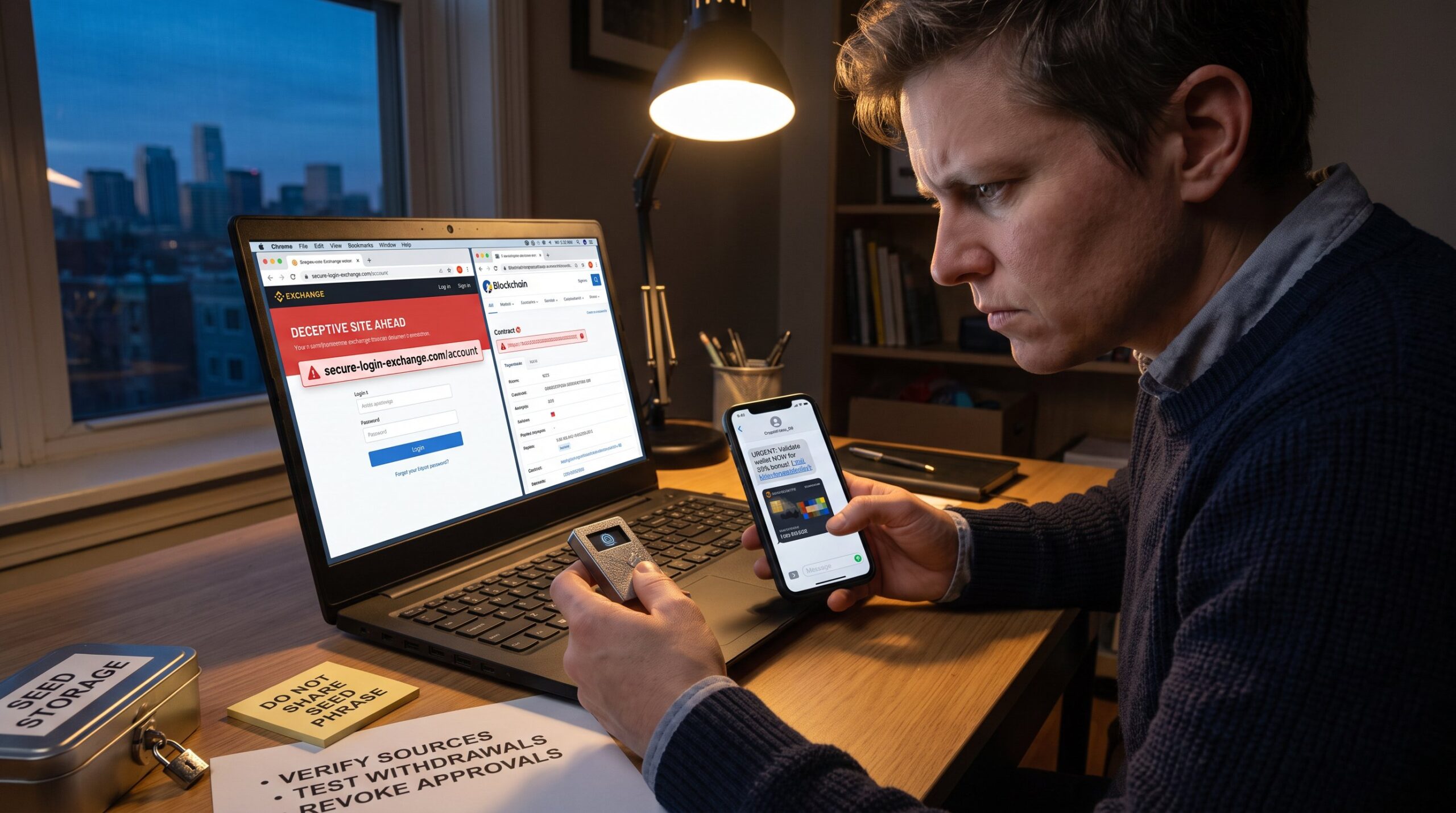
Common Cryptocurrency Scams and How to Avoid Them begins with a simple fact: scammers treat crypto like fast cash and social engineering like craft. Readers who invest in 2026 face increasingly sophisticated cons, deepfakes, long‑con “pig‑butchering,” malicious smart contracts, and fake platforms. This guide explains how those scams work, shows the red flags to spot quickly, and gives practical, step‑by‑step defenses. It prioritizes clear actions investors can use immediately: verify sources, protect keys, test withdrawals, and document attacks. The goal: reduce risk while keeping participation in digital markets practical and informed.
Key Takeaways
- Common cryptocurrency scams exploit trust and technical gaps using social engineering and fake platforms, so always verify sources before investing.
- High-yield investment scams like pig-butchering show fake profits to lure larger transfers, then freeze withdrawals—stay alert to such red flags.
- Protect your crypto by using hardware wallets, unique passwords, two-factor authentication, and regularly revoke suspicious smart contract approvals.
- Test withdrawals with small amounts to ensure platform legitimacy and avoid irreversible losses from fake exchanges or malicious contracts.
- If scammed, immediately stop transfers, revoke malicious approvals, document all evidence, and report to authorities and industry trackers.
- Be cautious with recovery services as many are scams; always verify firms through official credentials and use verified support channels.
How Cryptocurrency Scams Work: The Mechanics And Psychology
Scams exploit trust first, then technical gaps. Scammers use social engineering to build rapport over days or weeks, then move victims to off‑platform channels where they can isolate and pressure them. They pair that trust with technical tricks: phishing pages that mimic exchanges, malicious smart‑contract approvals that appear routine, and fake screenshots that show fabricated balances. Psychologically, the scams rely on urgency and reward signals, FOMO, the promise of high yields, or fear of missing out on a “limited” token drop.
Layered mechanics create success. For example, pig‑butchering begins with friendly contact (chat apps or dating platforms), then shifts to investment talk and fake profits. The victim grows confident and transfers larger sums to a bogus platform, which later freezes withdrawals. In contract scams, a seemingly normal wallet approval gives a malicious contract permission to transfer tokens: shortly after, funds vanish.
Consequence and example: in several 2024–2026 reports, attackers used deepfake video to impersonate exchange staff and convince users to share one‑time passwords. That adds urgency, people comply to avoid “account suspension.” Understanding both the technical and emotional levers helps investors interrupt the flow: if a request creates panic or promises guaranteed returns, it is working as the scammer intends.
The Most Common Crypto Scams To Watch For (And How They Operate)
High‑yield investment scams (including pig‑butchering). Fact: these schemes often show staged trading wins to earn trust, then ask for larger wire or crypto transfers to a closed platform. They operate by isolating victims and blocking withdrawals. Scammers sometimes return small “profits” to lure bigger stakes before vanishing.
Fake exchanges, wallets, and trading platforms. These sites mimic real services with cloned interfaces and malicious download links. Users who sign up and deposit may find withdrawals disabled or discover they gave private keys or seed phrases to attackers. Always check app publishers and domain registration details.
Rug pulls and memecoin scams. Developers create a token, pump interest on social channels, and then remove liquidity from decentralized exchanges. That leaves token holders with worthless coins. Look at initial liquidity, developer holdings, and transaction history: red flags include 100% owner supply and token contracts that let creators mint new coins.
Phishing, wallet drainers, and malicious airdrops. Airdrops can carry malicious contract calls: clicking a link or approving a transaction can sign away token allowances. Wallet drainers use crafted approvals to move tokens without additional confirmations. Never paste your seed phrase into a site and avoid approving unknown smart contracts.
Impersonation, fake giveaways, and recovery scams. Scammers impersonate support staff on social channels or create recovery services that demand payment. Recovery services are frequently secondary scams: they ask for remote access or upfront fees and then disappear.
Bitcoin ATM and phone extortion scams. Scammers use phone calls, spoofed numbers, and threats to force victims to buy crypto via ATMs or payment apps. They rely on immediate transfers and the irreversibility of crypto transactions.
For more background on common schemes and market risks, the site offers a broader primer in its digital asset guide. That overview helps investors understand systemic risks before choosing storage or trading options.
Red Flags, Security Best Practices, And Tools To Protect Your Crypto
Red flag first: guaranteed returns. If a platform promises fixed, high yields with no risk, it is almost certainly fraudulent. Other immediate warnings: pressure to act now, requests for private keys or seed phrases, unknown smart‑contract approvals, and links sent in DMs.
Practical defenses investors can carry out today:
- Self‑custody with hardware wallets: Use a hardware wallet like Ledger or Trezor for long‑term holdings. Keep seed phrases offline and split across secure locations. Hardware wallets reduce exposure to web‑based phishing.
- Unique passwords and 2FA: Use a password manager and enable hardware 2FA (U2F) where supported. Avoid SMS 2FA when possible.
- Verify apps and domains: Check publisher names and certificate details in app stores. Test withdrawals with small amounts before sending large sums.
- Revoke approvals: Regularly audit token approvals using blockchain explorers or revocation tools and cancel suspicious allowances.
- Use official tools: Track scams with official trackers and consult blockchain explorers to confirm liquidity and token distribution.
Tools and resources: people new to wallets should read the site’s explainer on wallet types. That article describes custodial vs self‑custody tradeoffs and helps choose the right storage model. Additional practical tools include on‑chain scanners and verified smart‑contract audits.
A concrete practice: when approached via social channels, pause for 24 hours and vet the contact through official support pages. That single pause prevented losses in many documented incidents where victims were asked to sign a contract within minutes.
What To Do If You’ve Been Scammed And How To Minimize Damage
First action: stop further transfers immediately. If a malicious contract approval is active, revoke it using a revocation tool or your wallet’s settings. That can block additional drains in some cases. Second, document everything, screenshots, transaction hashes, chat logs, and timestamps.
Report promptly. File a report with local law enforcement and the relevant financial regulator. Also submit details to industry trackers and exchanges: some exchanges will flag or freeze deposits tied to known scam addresses. For primary guidance about reporting and broader market context, MoneySideOfLife’s article on how cryptocurrency works explains transactional evidence and chains that investigators use.
Beware recovery services. Many “recovery specialists” are scammers who request upfront fees and remote access. Instead, verify any firm through independent reviews, public court records, and official credentials. If an exchange or wallet froze assets, contact their verified support channels and provide transaction evidence.
Practical example: one victim revoked a malicious approval within 12 hours and recovered control of remaining tokens, but could not recover funds already sent to mixers. That underscores two realities, speed matters, and irreversible transfers are common. For next steps and coverage of wallet choices after an incident, read the site’s comparison on custody models.
Verification resource: for official warnings on tactics fraudsters use, the SEC maintains an investor alert that outlines common lures and steps to protect oneself, which helps validate suspicious outreach.
Conclusion
People who lose crypto often trace the failure to a small missed step: clicking a link, trusting a stranger, or approving a contract without reading. The clearest defense is a combination of skepticism and simple habits, use hardware wallets, verify sources, test small withdrawals, and document every interaction. Scams evolve, but these concrete practices reduce exposure and increase the chance of recovery. For readers ready to deepen their knowledge, the MoneySideOfLife cluster offers practical primers and comparisons to help choose safe tools and strategies in 2026 and beyond.